TripIt has been organising travellers' bookings for well over a decade, and it's very good at it. RPlan reads bookings too, but it's built for a different job. This comparison is meant to help you choose, not to pretend one of them is right for everyone.
TripIt's details come from its own site, its App Store listing and recent reviews, checked in November 2026. Prices change, so check before you buy.
The short version
| RPlan | TripIt | |
|---|---|---|
| What it's for | Planning the trip, day by day | Organising your bookings into an itinerary |
| How you pay | Per trip, once | Free plan, or a yearly Pro subscription |
| Price | First trip free, then £5 a trip | Pro is $48.99 a year on the App Store |
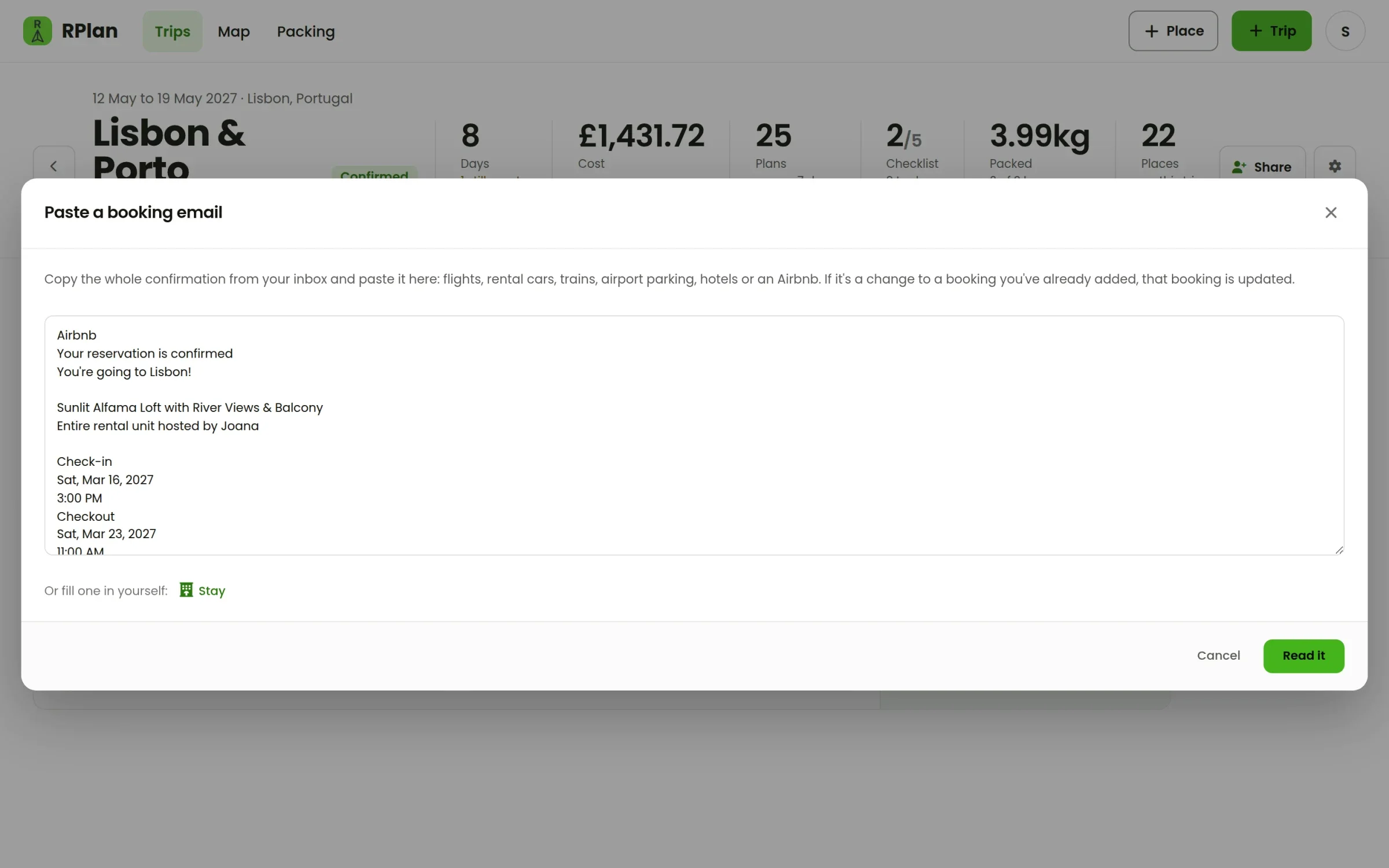
| Getting bookings in | Paste a confirmation email | Forward emails to TripIt, or connect your inbox |
| Flight alerts | No | Real-time alerts with Pro |
| Your own plans | Yes, with times, places and travel between them | Mostly bookings |
| Best for | Leisure trips planned in detail, often together | Frequent and business travel |
What each one is for
TripIt turns booking confirmations into one itinerary. Forward a confirmation to TripIt and it adds the flight, hotel or car to the right trip. It's ideal if you travel often and mostly need every booking in one place.
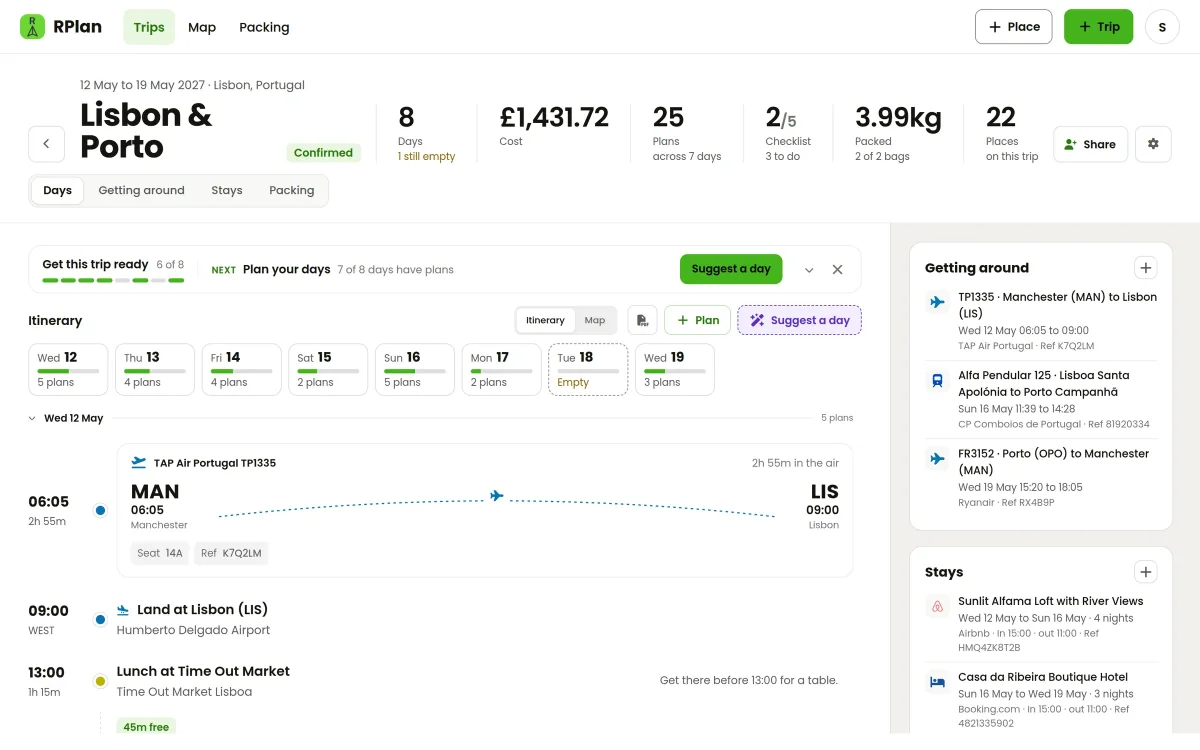
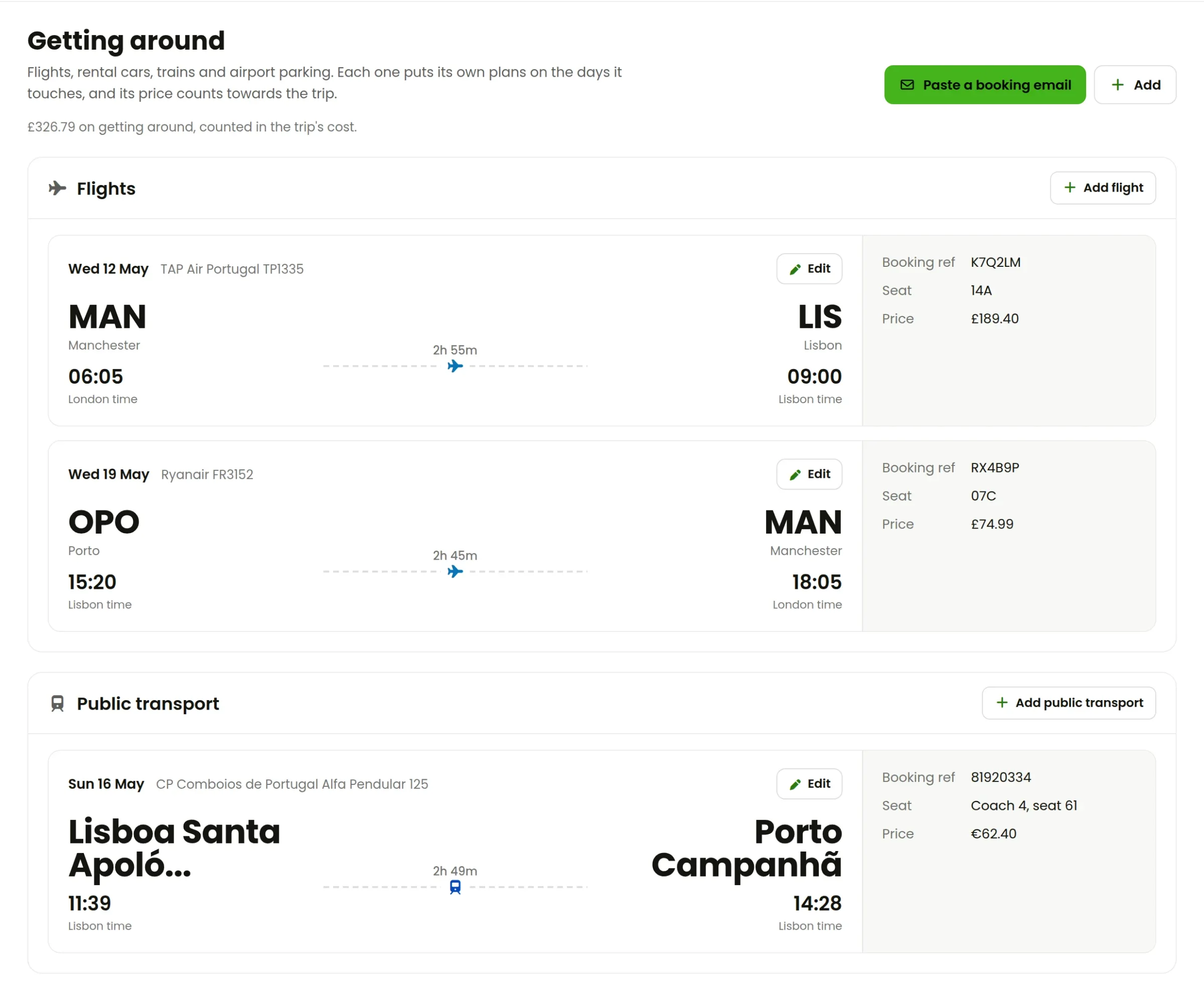
RPlan starts from the days. Paste a confirmation and it reads out the flights, stays, trains, rental cars and parking for you to check. Then each booking goes onto the right day, at its local time, with your own plans around it: the museum in the morning, lunch, the walk to the station. RPlan works out the travel time between plans and shows the free time left, so you can see whether a day works.
Paying for it
TripIt has a free plan, and TripIt Pro is a yearly subscription: $48.99 on the App Store. Pro is aimed at people who fly a lot, with real-time flight alerts for delays and gate changes, fare tracking and seat tracking.
RPlan has no subscription. Your first trip is free with everything switched on, and after that each trip is £5, paid once. If you take two or three trips a year, that's £10 to £15, and nothing in a year you stay home.
Where RPlan goes further
- Plans of your own. Places from Google with their address, hours and category, a time and a length, all on the same timeline as your bookings.
- Local times, worked out. Every plan is on its own clock, and a flight shows both ends on theirs. More in time zones on a trip.
- Checks between bookings. Airport parking that ends before your flight home lands is flagged, and a night without a stay is pointed out.
- Planning together. Add the people going, and choose what each of them can see and change.
- An assistant that knows the trip. Suggest a day plans an empty day around everything else you've booked.
- Packing. A reusable packing library, with the weight of each bag.
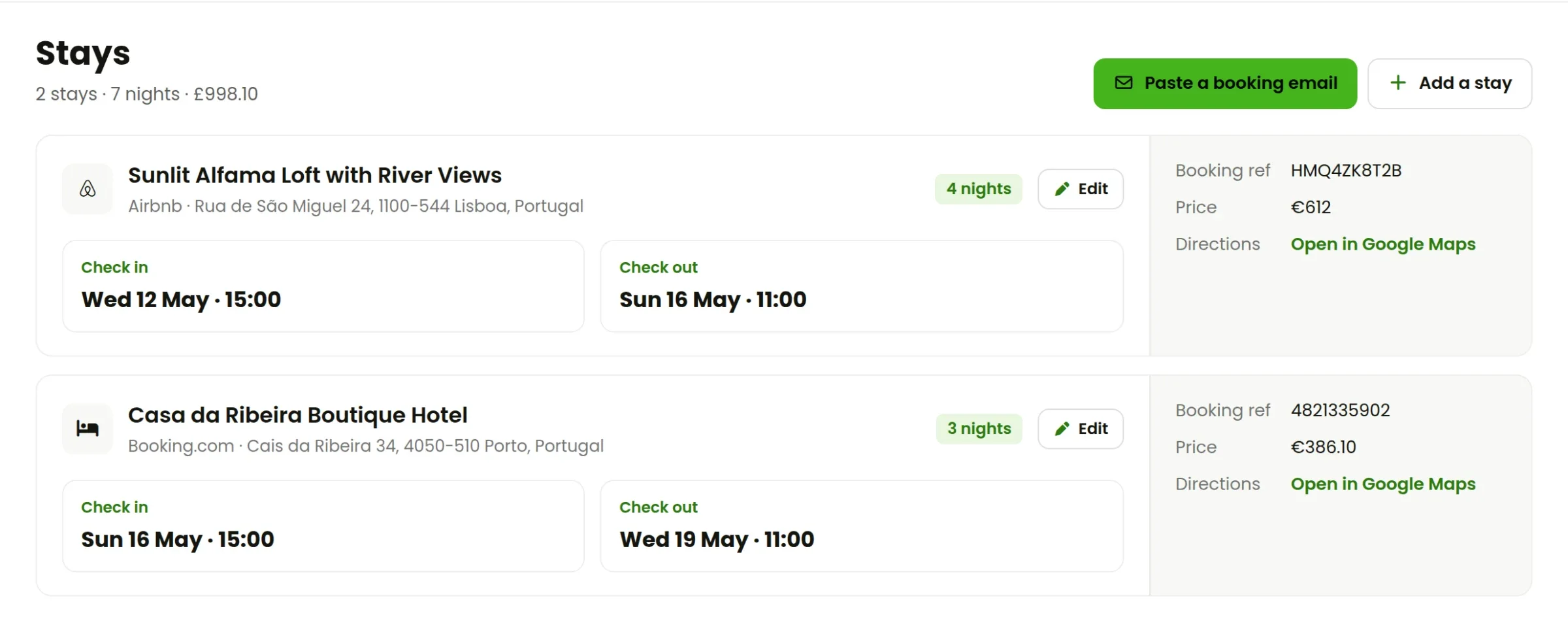
Where TripIt is the better choice
- You fly often, especially for work, and want alerts when a flight is delayed or a gate changes. RPlan doesn't track flights.
- You'd rather not touch your bookings at all. With your inbox connected, TripIt picks them up as they arrive. In RPlan you paste each confirmation in.
- You just need the bookings in one place, not a plan for the days in between.
Plenty of people would happily use both: TripIt for the alerts, RPlan to plan what happens between the flights. If that sounds like you, your first trip in RPlan is free.
For the wider picture, see RPlan compared with Wanderlog, TripIt and Roadtrippers.