
There are good trip planners out there, and we'd rather you picked the right one than the wrong one. This is an honest look at how RPlan differs from three well-known apps, Wanderlog, TripIt and Roadtrippers, and who each one suits.
Prices are the ones each company published in November 2026, in the currency it lists them in. Check their sites before you buy, because prices change.
The short version
| RPlan | Wanderlog | TripIt | Roadtrippers | |
|---|---|---|---|---|
| How you pay | Per trip, once | Yearly subscription for Pro | Yearly subscription for Pro | Yearly subscription for Premium |
| Price | First trip free, then £5 a trip | Free plan, Pro around $40 a year | Free plan, Pro $48.99 a year | Free plan, Premium $59.99 a year |
| Everything included? | Yes, on every trip | Some features are Pro-only | Some features are Pro-only | Some features are Premium-only |
| Best at | Planning the days, together | Collaborative planning and discovery | Organising bookings from your inbox | Road trips, especially in North America |
Wanderlog's price comes from its app store listings and published reviews, TripIt's from its App Store listing, and Roadtrippers' from its own help centre.
Paying per trip instead of per year
This is the biggest difference. Subscriptions make sense if you travel constantly. Most people take one, two or three trips a year, and pay for twelve months of an app they use for a few weeks.
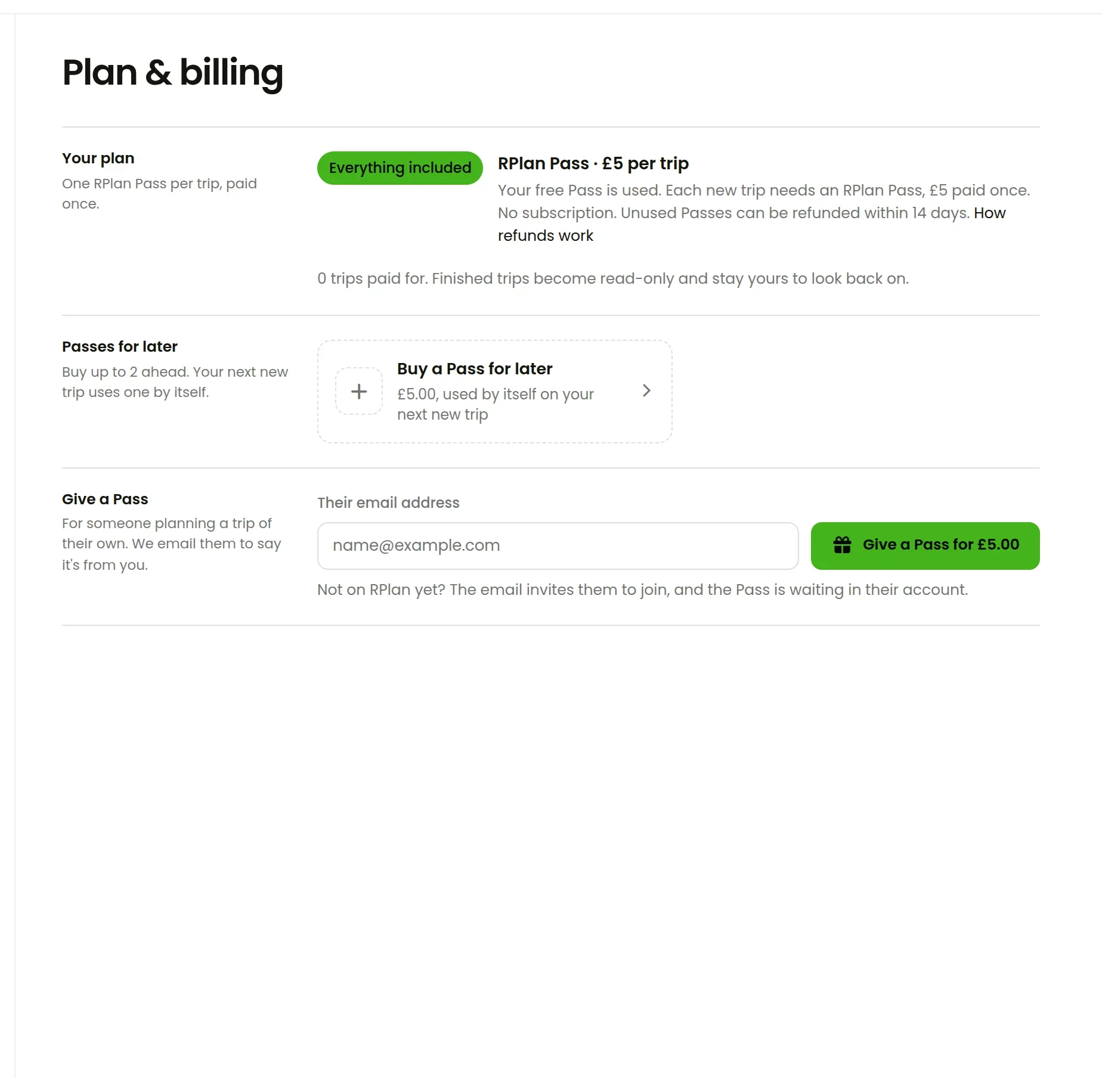
RPlan charges per trip. Your first trip is free with everything switched on. After that, each trip is unlocked with an RPlan Pass: £5, paid once, with every feature included. There's no subscription to cancel and no renewal in a year's time. A finished trip stays in your account, read-only, to look back on.
Some rough sums, for someone who takes two trips a year:
- RPlan: £0 for the first trip, then £5 a trip. That's £5 in the first year and £10 a year after.
- A $40 to $60 yearly subscription: the same every year, whether you travel twice or not at all.
You can also buy up to two Passes ahead, or give one to someone else by email.
An assistant that knows your trip
Many AI trip planners start from a blank chat box: you describe the trip, and it writes you an itinerary. That's useful for ideas. The problem is that it doesn't know what you've already booked, where you're staying or what's on the day before.
RPlan's assistant works the other way round. It reads the trip first: the dates, the stays, the flights, the plans already there and how far apart they are. Then it works where you are:
- Suggest a day plans a whole empty day around everything else on the trip. It picks real places close together, in an order that works, with the walking or travel time between them. If a time would clash, it moves it and tells you.
- Before you go suggests checklist items for this particular trip.
- In the plan editor it answers quick questions, like how long a place takes or when it's best to go.
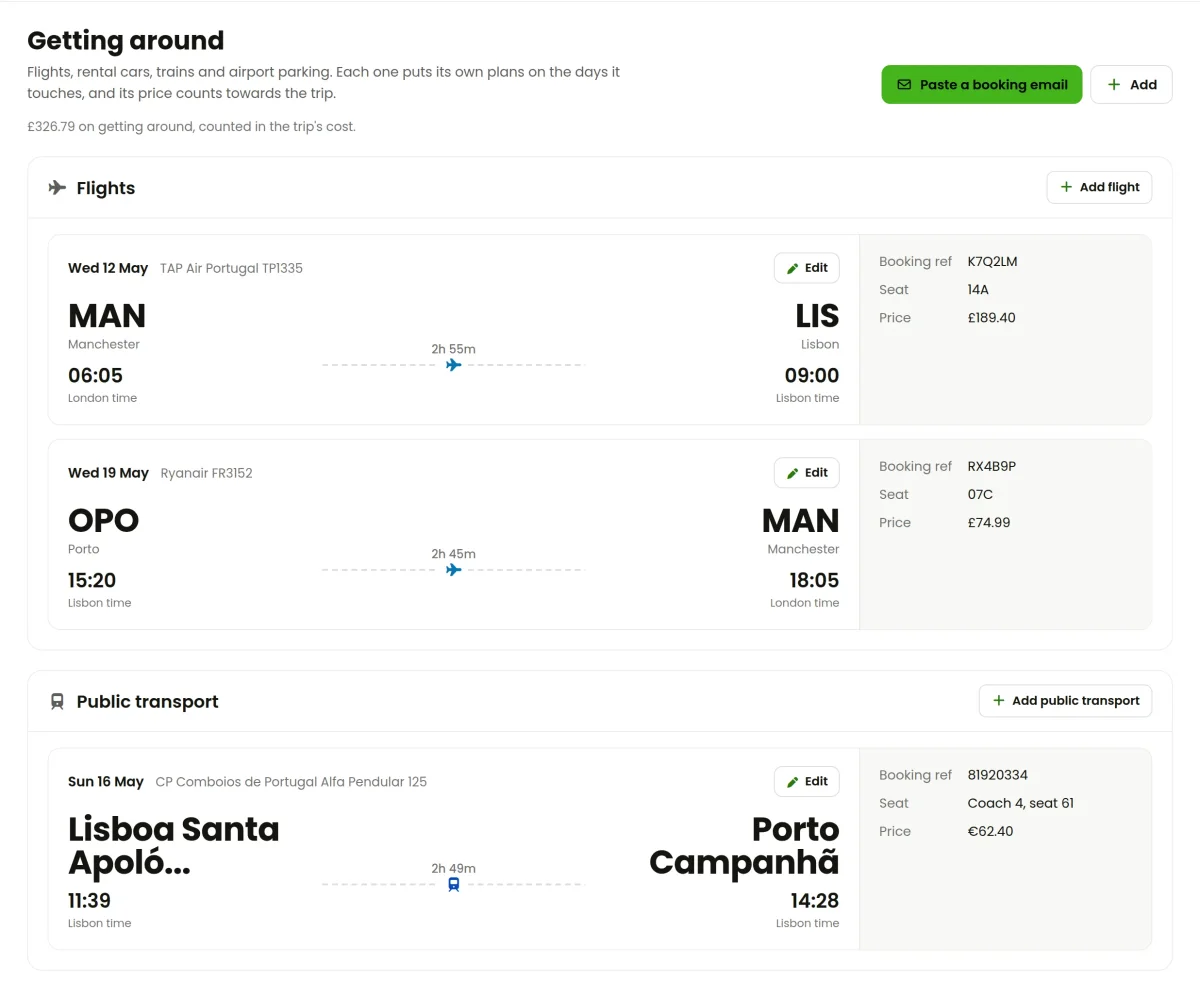
- Paste a booking email and it reads out the flights, trains and stays for you to check.
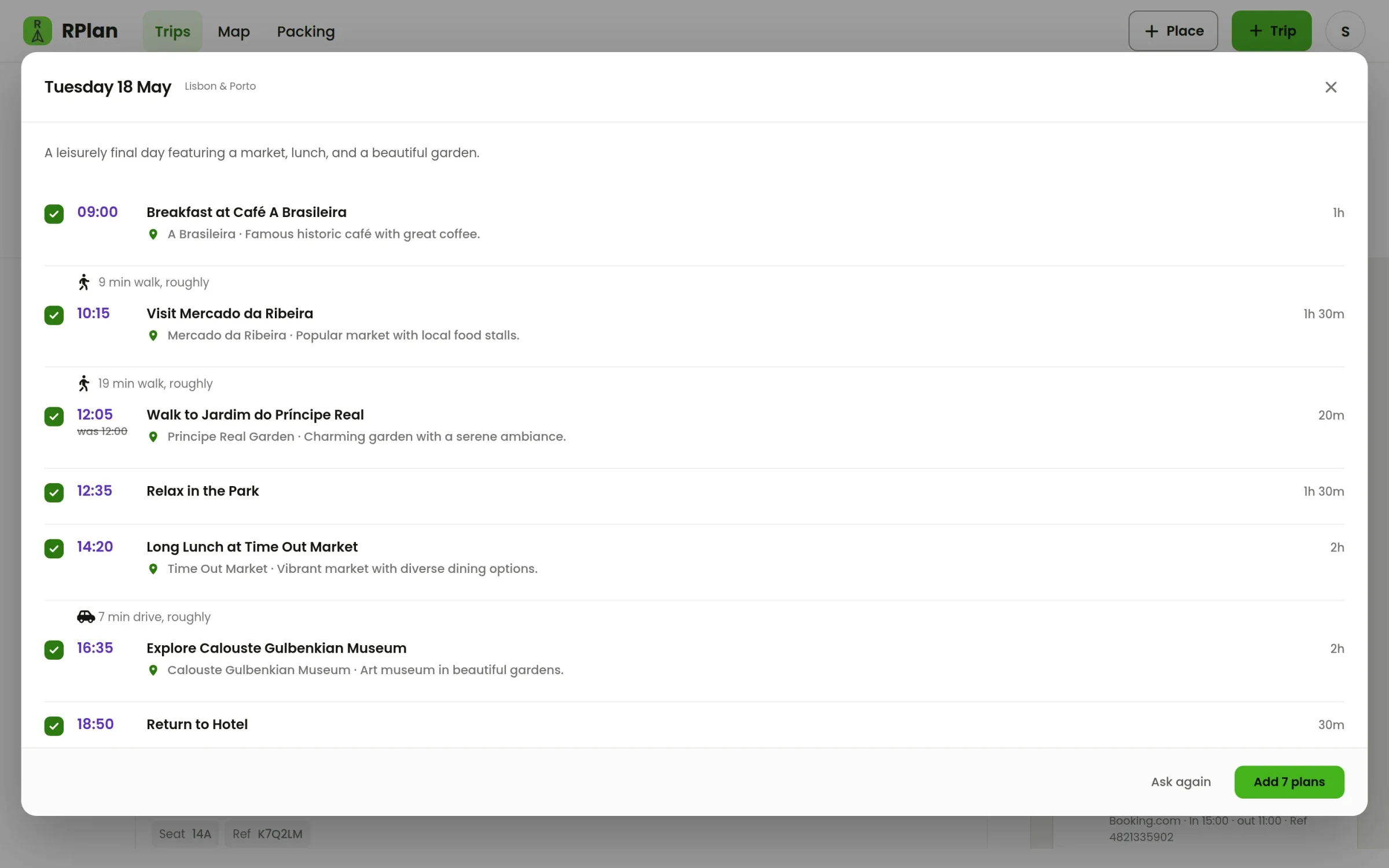
Nothing it suggests reaches your trip until you add it, and it's included in every trip. Read more about how the assistant works.
Planning the days, not just storing bookings
TripIt is very good at collecting bookings: you forward your confirmation emails and it builds a list. If that's all you need, it does it well, and Pro adds flight alerts.
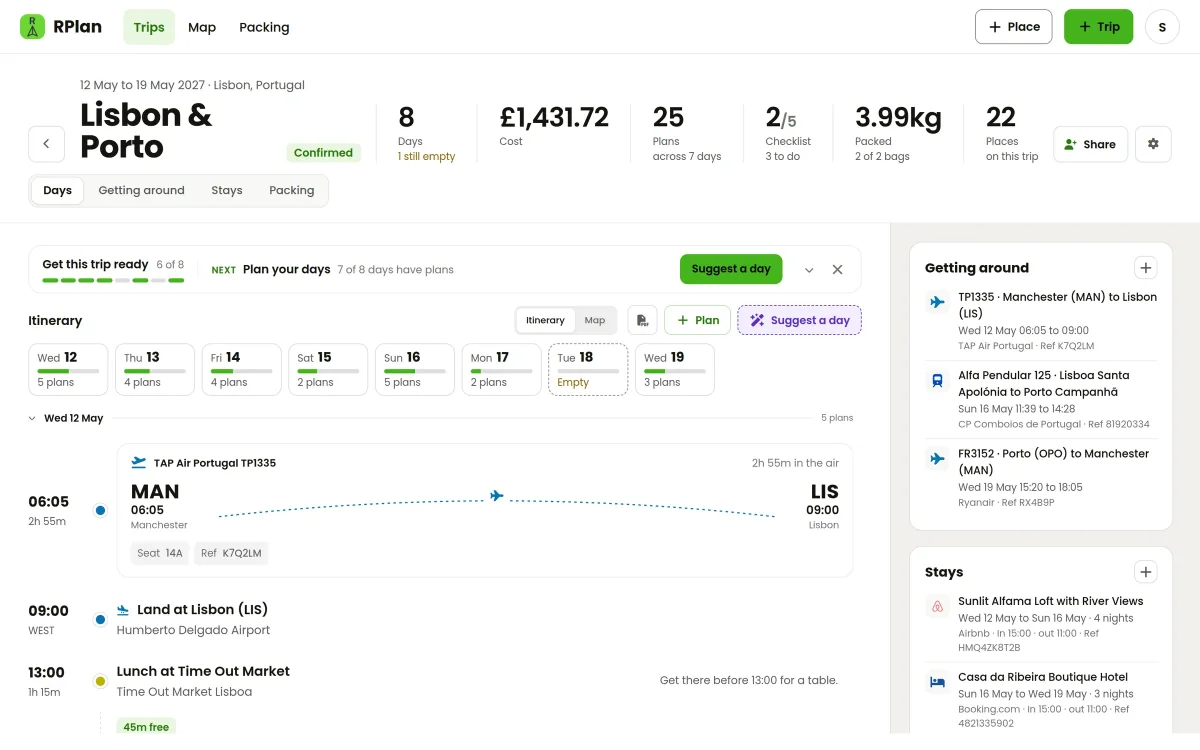
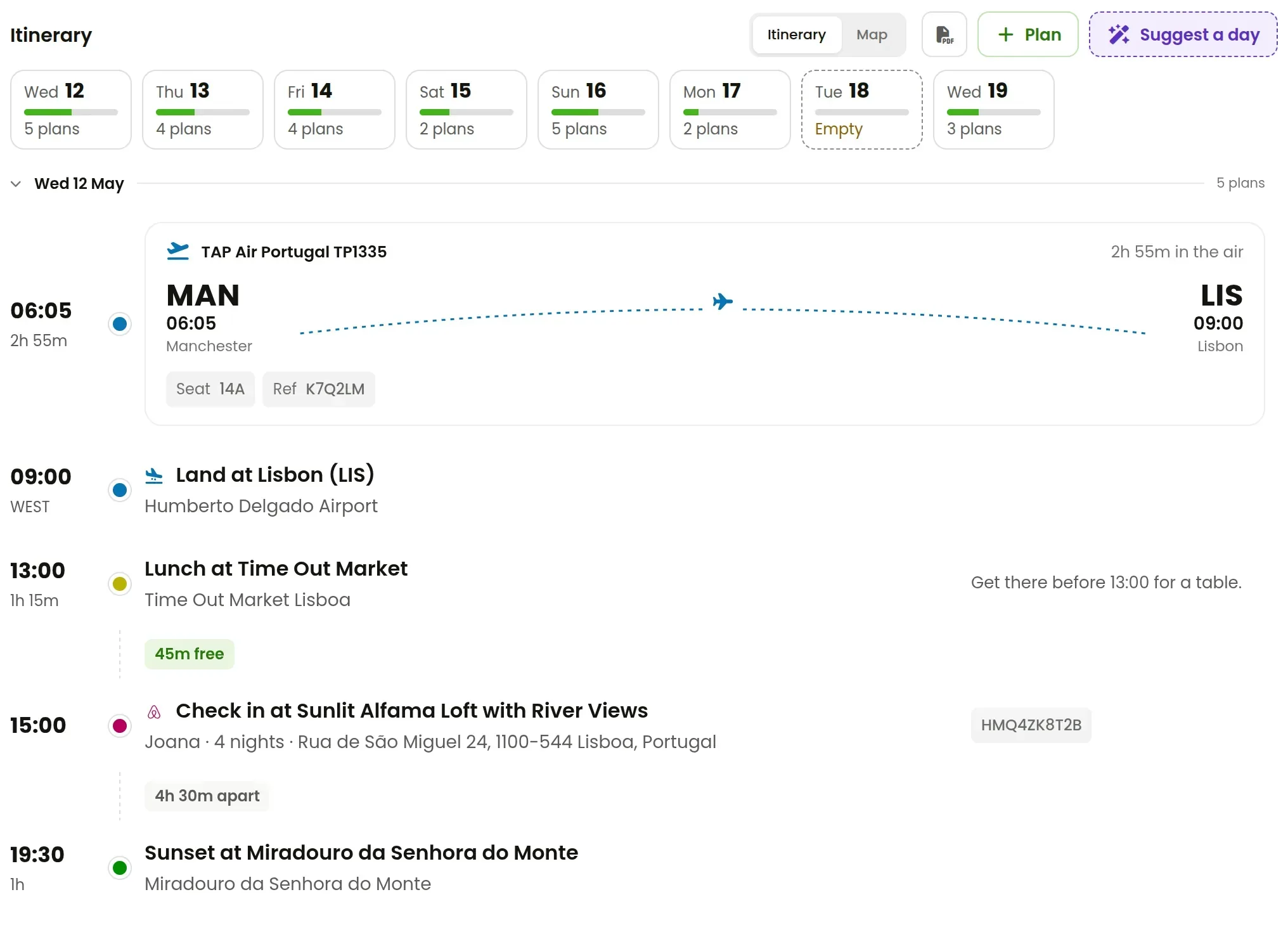
RPlan reads bookings too, from a pasted email. Then it puts them on the days, at their local times, as locked plans, with your own plans around them. It shows the gaps between plans, and warns you when two are too close. The difference is between a list of what you've booked and a plan of what you're doing.
Planning together
Wanderlog is built for collaboration and does it well, with a generous free plan. RPlan's shared trips are similar in spirit, with two differences:
- Per-person permissions. For each person you choose whether they can change plans and days, see the bookings and see the packing.
- Locks while someone's editing. A plan someone else is editing shows their name and is locked for everyone else until they're done.
Changes appear for everyone live, and people who opt in can see each other on the trip's map.
Other things RPlan does differently
- Times that stay local. Each plan is on the clock of its place, and flights show both ends on their own clocks. More in time zones on a trip.
- A packing library with weights. Your items and bags are built once and reused, with the weight of each bag totalled. More in the packing list you only write once.
- Costs in the trip's currency. Prices in euros convert into the trip's pounds as you go.
Who each one suits
- Choose Roadtrippers if you're planning a long drive, especially in the US or Canada, and want to find stops along the route.
- Choose TripIt if you travel often for work and mostly need your bookings in one place, with flight alerts.
- Choose Wanderlog if you want a free plan, lots of discovery content and a big community of shared guides.
- Choose RPlan if you take a few trips a year, want to plan the days properly with the people you're going with, and would rather pay £5 for a trip than a yearly subscription.
The fairest test is to try it. Your first trip in RPlan is free, with everything switched on and no card needed.